This section is dedicated to my previous work in book cover and graphic design.
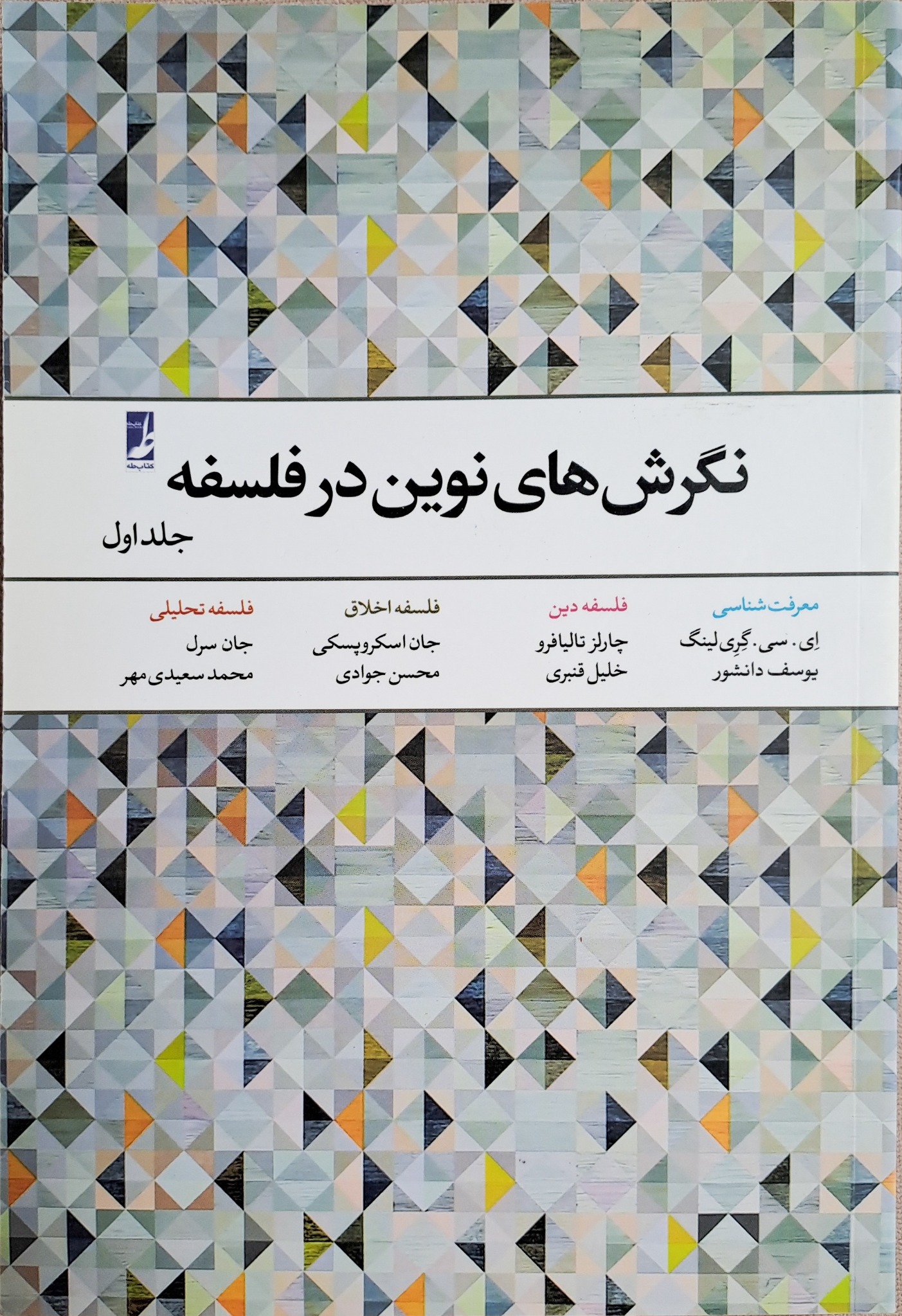
Volume One shown · Cover design for both volumes: Mahdi Kavyani Nejad · Painting: Emma Biggs and Matthew CollingsView the full cover ↗
New Perspectives in Philosophy — Volumes One and Two
I designed the covers of both volumes of New Perspectives in Philosophy. The first volume brings together four fields: epistemology, philosophy of religion, moral philosophy and analytic philosophy. Both volumes were published with similar cover designs, with the subject headings changed to reflect their different contents. For these covers, I used Living Creature (2013), a painting made jointly by the British artists Emma Biggs and Matthew Collings. To me, its grid of coloured triangles and diamonds pictures the relationship between diversity and order in philosophical thought: elements with different colours and orientations form a continuous structure together. The changing combinations as the eye moves across the painting also connect with the book’s title; the same whole can be seen from a fresh perspective each time. The geometric ground and predominantly quiet colours, alongside the white title band, provide a setting that reflects the diversity of the book’s subjects while keeping the lettering clear and coherent.
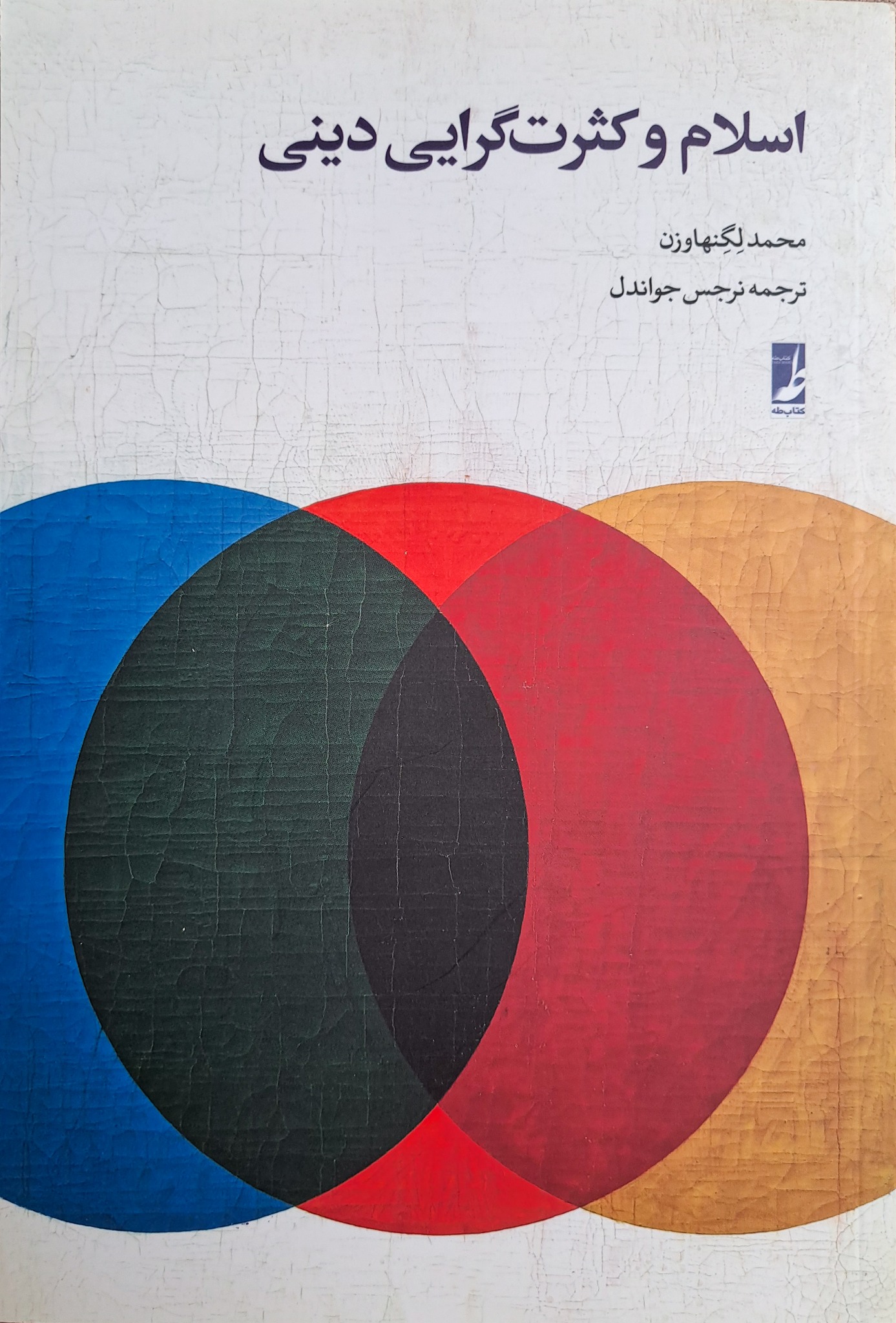
Islam and Religious Pluralism, written by Muhammad Legenhausen and translated into Persian by Narges Javandel, examines Islam’s relationship with religious diversity and questions of truth and salvation. In his critique of John Hick, Legenhausen proposes “non-reductive pluralism”: an approach that combines tolerance with taking the real differences between religions seriously. For the cover, I chose Hanni Winkelmann (2018), a painting by the American artist Dan Levenson. Three circles—blue, red and yellow—overlap while retaining their distinct identities, creating new colours and areas at their intersections. In my reading of the image, the different colours suggest a plurality of perspectives, while their overlaps suggest encounters, exchanges of ideas and the possibility of dialogue. This composition brings the book’s central question into visual form: how can differences be preserved while making room for connection and coexistence?